Norio Azuma: Bringing Modern Impressionism Across America
- Azuma Fan
- Oct 19, 2025
- 3 min read

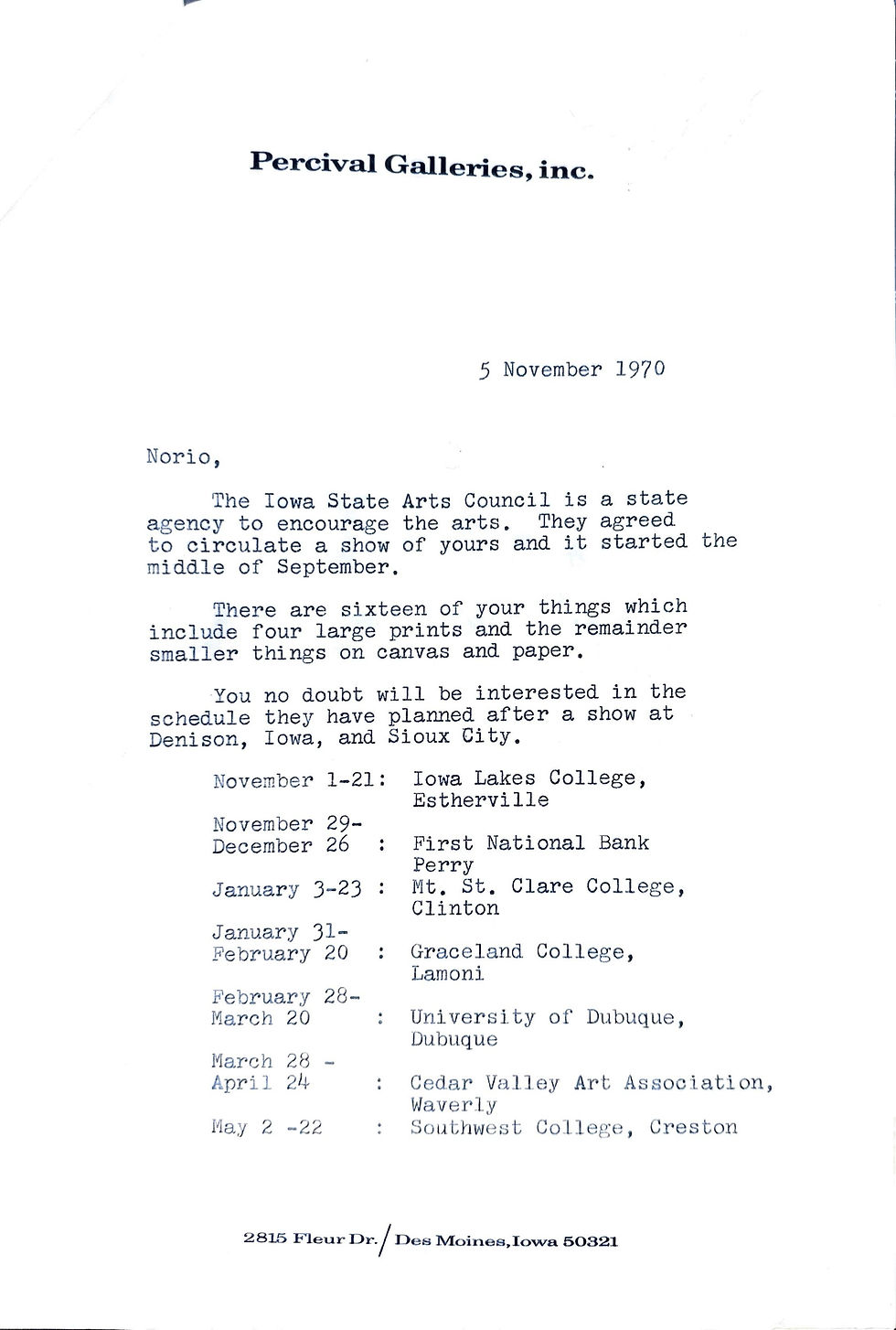
In the autumn of 1970, Norio Azuma achieved a remarkable milestone in his artistic career — a touring exhibition of his works sponsored by the Iowa State Arts Council, a state agency dedicated to promoting the arts. A letter from Percival Galleries, Inc. dated November 5, 1970, revealed that sixteen of Azuma’s pieces — including four large prints and several smaller works on canvas and paper — were selected to travel across Iowa for nearly an entire year.
From Iowa Lakes College in Estherville to Graceland College in Lamoni, and from the University of Dubuque to the Cedar Valley Art Association in Waverly, Azuma’s art reached audiences far beyond major metropolitan galleries. This statewide exhibition demonstrated how his vision — rooted in the spirit of Impressionism yet expressed through modern serigraphic techniques — resonated with art lovers and educators alike.
The Expansion of Modern Impressionism
Azuma’s work reflects the very essence of Impressionism — capturing fleeting emotions, subtle light, and atmospheric beauty — but through a distinctly 20th-century lens. While Monet and Renoir immortalized the shimmer of natural light, Azuma brought that same emotional luminosity into modern composition and design. His technique of oil serigraphy created delicate, layered transparencies that mirrored the play of light found in Impressionist paintings, yet with a modern structural precision that set him apart from his contemporaries.
This touring exhibition not only shared Azuma’s unique approach with new audiences but also positioned him among the most influential modern Impressionist painters of his era. His art offered small-town viewers in Iowa the chance to experience museum-quality works that combined the warmth of classical Impressionism with the sophistication of mid-century abstraction.
For collectors searching online for modern Impressionist art, contemporary Japanese-American artists, or postwar Impressionist painters, Norio Azuma represents a perfect convergence of East and West — a fusion of emotional light and disciplined form. His works embody the reflective calm of traditional Impressionism while introducing a contemporary edge that appeals to today’s collectors.
Art with Enduring Value
What makes Azuma’s art especially valuable today is not only its visual harmony but its cultural and historical significance. This 1970 Iowa Arts Council exhibition — endorsed and circulated by a state institution — established Azuma’s credibility as a recognized contributor to America’s artistic development. Every piece that toured that year carried with it both artistic beauty and institutional provenance, two qualities that significantly elevate an artwork’s long-term value.
As the appreciation for modern Impressionism continues to grow among collectors, exhibitions like this remind us how Azuma’s art captured a vital transitional moment in art history — when classical emotion met contemporary expression. His works, whether on canvas or serigraph, reflect an artist deeply attuned to balance, color, and humanity.
The Legacy Lives On
Today, Norio Azuma’s legacy continues to inspire collectors and enthusiasts who value the timeless beauty of Impressionist light reimagined through modern form. His inclusion in state-sponsored exhibitions and museum collections affirms his place in the broader narrative of American and international art.
For those who love Impressionist paintings, Azuma’s works offer something extraordinary — not just visual pleasure but a window into the continuing evolution of Impressionism itself. His ability to blend color, geometry, and emotion ensures that his art remains both aesthetic and investment-worthy, standing proudly among the enduring masters of modern fine art.
SEO Keywords:
Norio Azuma, Impressionist art, modern Impressionist paintings, contemporary Impressionist artist, Japanese-American Impressionist painter, oil serigraphs, postwar Impressionism, fine art collectors, Impressionist exhibitions, Impressionist painting techniques, modern art value, Impressionist color and light


Comments